

Planning a full home renovation involves more than just picking colours and fixtures. It’s a major commitment that affects your daily life, budget, and ultimately the value of your home. Without a clear understanding of all the moving parts, you risk delays, budget overruns, and frustration.
While our complete home renovation guide covers every aspect of the renovation process, this article focuses specifically on the planning phase—the foundation that determines whether your project succeeds or becomes a nightmare.
This guide covers the key considerations for Auckland homeowners preparing for a full renovation. The focus is practical, transparent advice to help you make confident decisions and avoid common mistakes. From assessing your property’s readiness to handling disruption and selecting the right team, we’ll walk you through the essentials that set successful renovations apart from costly disasters.
While our complete home renovation guide covers every aspect of the renovation process, this article focuses specifically on the planning phase—the foundation that determines whether your project succeeds or becomes a nightmare.
This guide covers the key considerations for Auckland homeowners preparing for a full renovation. The focus is practical, transparent advice to help you make confident decisions and avoid common mistakes. From assessing your property’s readiness to handling disruption and selecting the right team, we’ll walk you through the essentials that set successful renovations apart from costly disasters.
Before You Start: The Hard Questions Nobody Wants to Answer
The first step in any renovation project is asking yourself some difficult questions—ones that many tend to avoid but can save you a lot of headaches later.
Can You Actually Afford This?
Renovations often cost more than advertised. In Auckland, it’s common for total expenses to be 20 to 30 percent higher than initial estimates. Hidden costs can arise from things like:
- Council fees and permit applications
- Unexpected structural repairs were discovered during construction
- Specialist assessments for electrical or plumbing systems
- Material price fluctuations during extended projects
One major cost consideration is where you and your family will live during the renovation. Staying at home means dealing with noise, dust, and restricted access for weeks or months. Moving out requires budgeting for rental accommodation and possibly storage. Both choices carry a price tag and practical challenges that need careful weighing.
Is Your Home Worth the Investment?
Not all renovations add equal value. While upgrading a kitchen or bathroom typically increases a home’s market appeal, large-scale renovations can sometimes cost more than the home’s resale value justifies. Certain homes with severe structural issues may be better off rebuilt or sold.
Evaluating your property’s value relative to your renovation budget helps avoid sinking money into projects with poor returns. It’s worth discussing this with a property specialist or experienced builder.
Evaluating your property’s value relative to your renovation budget helps avoid sinking money into projects with poor returns. It’s worth discussing this with a property specialist or experienced builder.
Can You Handle the Disruption?
Renovations disrupt daily life. Noise levels can spike, dust is inevitable, and multiple tradespeople entering and exiting your home can be unsettling. Families with young children, elders, or health concerns may find chronic stress or safety risks.
Key disruption factors include:
Key disruption factors include:
- Construction noise starting as early as 7am
- Dust affecting air quality and household cleanliness
- Limited access to rooms, kitchens, or bathrooms
- Parking restrictions due to materials and equipment
- Strangers working in your personal space daily
Expect longer project durations than quoted. Delays caused by weather, material shortages, or regulatory processes are common. Realistic expectations about how your day-to-day routine will be affected reduce frustration and prepare your household emotionally and logistically.

Setting Your Renovation Scope and Priorities
Defining what you want your renovation to achieve is essential to controlling costs and timelines.
Defining "Full Home Renovation"
A full home renovation generally means structural changes, new layouts, and updates to electrical, plumbing, and heating systems. This differs from minor cosmetic updates like painting or floor replacements.
Begin with a room-by-room assessment: which spaces require rewiring? Which need plumbing upgrades? Cull non-essential changes to focus on features that will deliver lasting value and support your lifestyle.
Begin with a room-by-room assessment: which spaces require rewiring? Which need plumbing upgrades? Cull non-essential changes to focus on features that will deliver lasting value and support your lifestyle.
The Priority Matrix: What to Tackle First
Prioritise renovations based on urgency and logic. For instance, kitchen upgrades typically precede redesigning living areas, as the kitchen often drives both functional efficiency and overall home enjoyment. Timing may also depend on Auckland’s variable weather patterns, with outdoor work planned for drier months.
Consider this logical sequence:
Consider this logical sequence:
- Structural work and foundation repairs first
- Electrical and plumbing rough-in
- Insulation and wall framing
- Flooring installation
- Kitchen and bathroom fitting
- Painting and finishing touches
Budget Reality Check: What Full Renovations Actually Cost
Knowing where your money goes is more than half the battle.
Auckland Renovation Cost Breakdown
Construction will often split roughly between labour and materials. Kitchens and bathrooms typically consume a significant portion of the budget because of the specialised trades and fixtures involved.
Typical Auckland renovation costs break down as follows:
Typical Auckland renovation costs break down as follows:
- Labour: 40-50% of total budget
- Materials: 30-40% of total budget
- Permits and consents: 5-10% of total budget
- Contingency and unexpected costs: 10-20% of total budget
The 20% Rule (And Why It's Not Enough)
A common rule is to allocate at least a 20 percent contingency fund for unexpected costs. However, this may still fall short when surprises like hidden water damage or council requirements arise.
Common cost blow-outs include discovering asbestos, structural damage, or outdated wiring that requires full replacement. Having a larger emergency fund provides peace of mind and project flexibility.
Common cost blow-outs include discovering asbestos, structural damage, or outdated wiring that requires full replacement. Having a larger emergency fund provides peace of mind and project flexibility.
Financing Your Renovation
Funding usually comes from a mix of home equity, mortgages, or personal loans. Managing cash flow carefully during the project prevents delays due to payment difficulties.
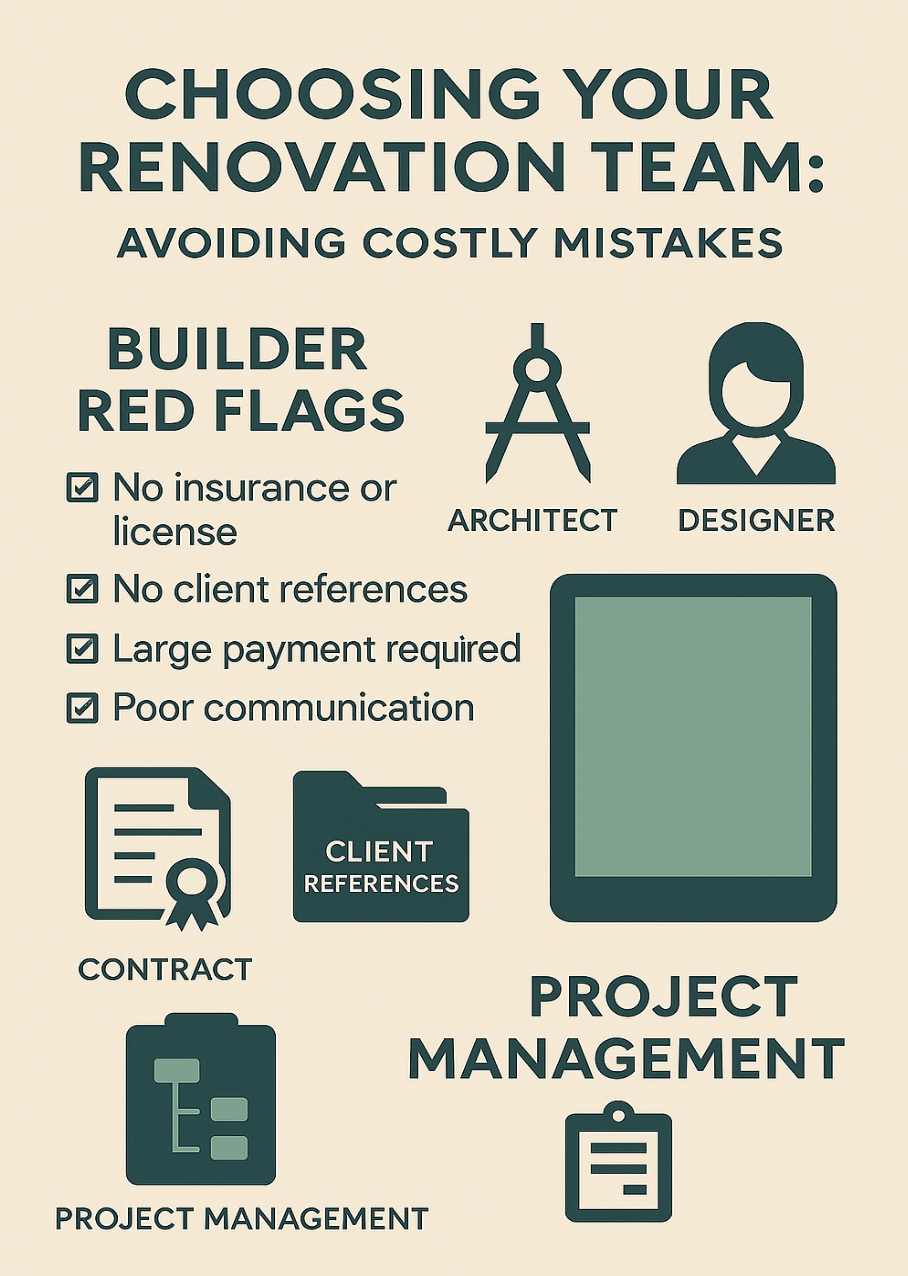
Choosing Your Renovation Team: Avoiding Costly Mistakes
Selecting the right professionals can be a deciding factor between a nightmare and a positive renovation experience.
The Builder Selection Process
Look for builders with verifiable references, transparent quotes, and open communication. Be wary of anyone promising extremely fast turnaround times or unusually low prices.
Red flags to watch for include:
Red flags to watch for include:
- Demanding large upfront payments
- Lack of proper licensing or insurance
- Unwillingness to provide recent client references
- Quotes that seem too good to be true
- Poor communication or delayed responses
Architect vs. Designer: When You Need Which
Architects often handle permits and structural designs, while interior designers focus on aesthetics. For major projects, an architect’s input is usually necessary for council approvals.
Project Management: Who's Really in Charge?
Decide if you want to self-manage the project or delegate that responsibility to your builder. Effective communication and frequent updates from your team reduce misunderstandings and keep everything on track.
Permits, Consents, and Legal Requirements
Understanding local rules early saves expensive rework and delays.
Auckland Council Requirements
In Auckland, any structural changes require building consent. Certain zoning or environmental aspects may also need resource consent, both of which take time to process.
Building consent is typically required for:
Building consent is typically required for:
- Structural alterations or additions
- Electrical work beyond basic replacements
- Plumbing modifications
- Insulation upgrades
- Window or door replacements
Neighbour Considerations
Neighbours play a part too. The law requires notification where access, boundaries, or noise affect them. Taking steps to maintain good relations avoids disputes.
Insurance and Liability
Insurance coverage must extend to the renovation period. Verify your builder’s liability insurance and clarify responsibilities for accidents or damages.
Living Through Your Renovation: Practical Survival Strategies
Handling daily life during a home renovation is challenging and choosing whether to stay or relocate requires thorough consideration.
Stay or Go: Making the Right Decision
If you decide to stay, create living zones that separate construction noise and dust from family areas. Temporary kitchens and bathrooms can help maintain some normalcy. Controlling dust with barriers and using noise-cancelling devices reduces discomfort.
For those who move out, calculate rental and storage costs alongside the benefits of peace and safety. Maintaining regular communication with your builder ensures progress doesn’t stall while you’re away.
For those who move out, calculate rental and storage costs alongside the benefits of peace and safety. Maintaining regular communication with your builder ensures progress doesn’t stall while you’re away.
If You Stay: Minimising Disruption
Families choosing to stay during renovation can take these steps:
- Set up a temporary kitchen in a garage or spare room
- Install dust barriers using plastic sheeting
- Create quiet zones away from construction areas
- Establish clear boundaries with workers about family areas
- Plan activities outside the home during noisy work periods
If You Move: Temporary Housing Options
Families with young children, pets, or health vulnerabilities often benefit from temporary accommodation to avoid stress and health risks.
Timeline and Project Management Realities
No renovation finishes exactly on the planned date. Delays due to Auckland’s weather, supplier issues, or design changes are common.
Realistic Timeline Expectations
Breaking the project into phases with built-in buffer times reduces stress. For example, exterior cladding should ideally happen in dry weather, so scheduling it in spring or summer helps prevent delay.
Common causes of delays include:
Common causes of delays include:
- Weather disruptions during winter months
- Material shortages or shipping delays
- Council approval processes taking longer than expected
- Unexpected structural issues discovered during construction Design changes requested mid-project
Creating Your Project Schedule
Consistent contact with your builder ensures you stay informed. Documenting progress and any changes aids in managing expectations and avoiding disputes.
Communication and Progress Tracking
Regular site meetings and progress reports help keep everyone aligned. Weekly check-ins allow for early problem identification and quick resolution.
Timeline and Project Management Realities
Many costly problems stem from insufficient planning.
Regular site meetings and progress reports help keep everyone aligned. Weekly check-ins allow for early problem identification and quick resolution.
Scope Creep: The Budget Killer
Scope creep—adding features or changes during construction—can inflate costs rapidly. Setting clear boundaries on what can be adjusted helps control budgets.
Typical scope creep scenarios include:
Typical scope creep scenarios include:
- Upgrading finishes once construction begins
- Adding extra rooms or features mid-project
- Changing layouts after work has started
- Requesting higher-end appliances or fixtures
- Extending projects to neighbouring areas
Underestimating Disruption
Underestimating how much renovation disrupts lifestyle often leads to frustration and fatigue. Taking disruption seriously and preparing your household accordingly is vital.
Rushing the Planning Phase
Starting construction before completing detailed plans or approvals results in expensive rework. Prioritise thorough planning to save time and money in the long run.
Conclusion: Your Next Steps
Planning a full home renovation requires honest assessment, realistic budgeting, and careful preparation. The difference between a successful project and a stressful nightmare often comes down to how well you prepare before construction begins. From understanding true costs to managing disruption, every decision you make in the planning phase affects your final outcome.
We’ve seen countless Auckland homeowners struggle with renovations that could have been smoother with better planning. At Intelli Design Homes, we guide clients through every planning step, from initial scope setting to final completion. Our fixed-price contracts and transparent communication help eliminate the surprises that derail other projects.
The planning phase isn’t glamorous, but it’s where your renovation’s success is determined. Get it right, and you’ll have the home you want without the stress and cost overruns that plague so many projects. Book your FREE consultation with us today and let’s discuss how proper planning can make bring your renovation to life.
We’ve seen countless Auckland homeowners struggle with renovations that could have been smoother with better planning. At Intelli Design Homes, we guide clients through every planning step, from initial scope setting to final completion. Our fixed-price contracts and transparent communication help eliminate the surprises that derail other projects.
The planning phase isn’t glamorous, but it’s where your renovation’s success is determined. Get it right, and you’ll have the home you want without the stress and cost overruns that plague so many projects. Book your FREE consultation with us today and let’s discuss how proper planning can make bring your renovation to life.